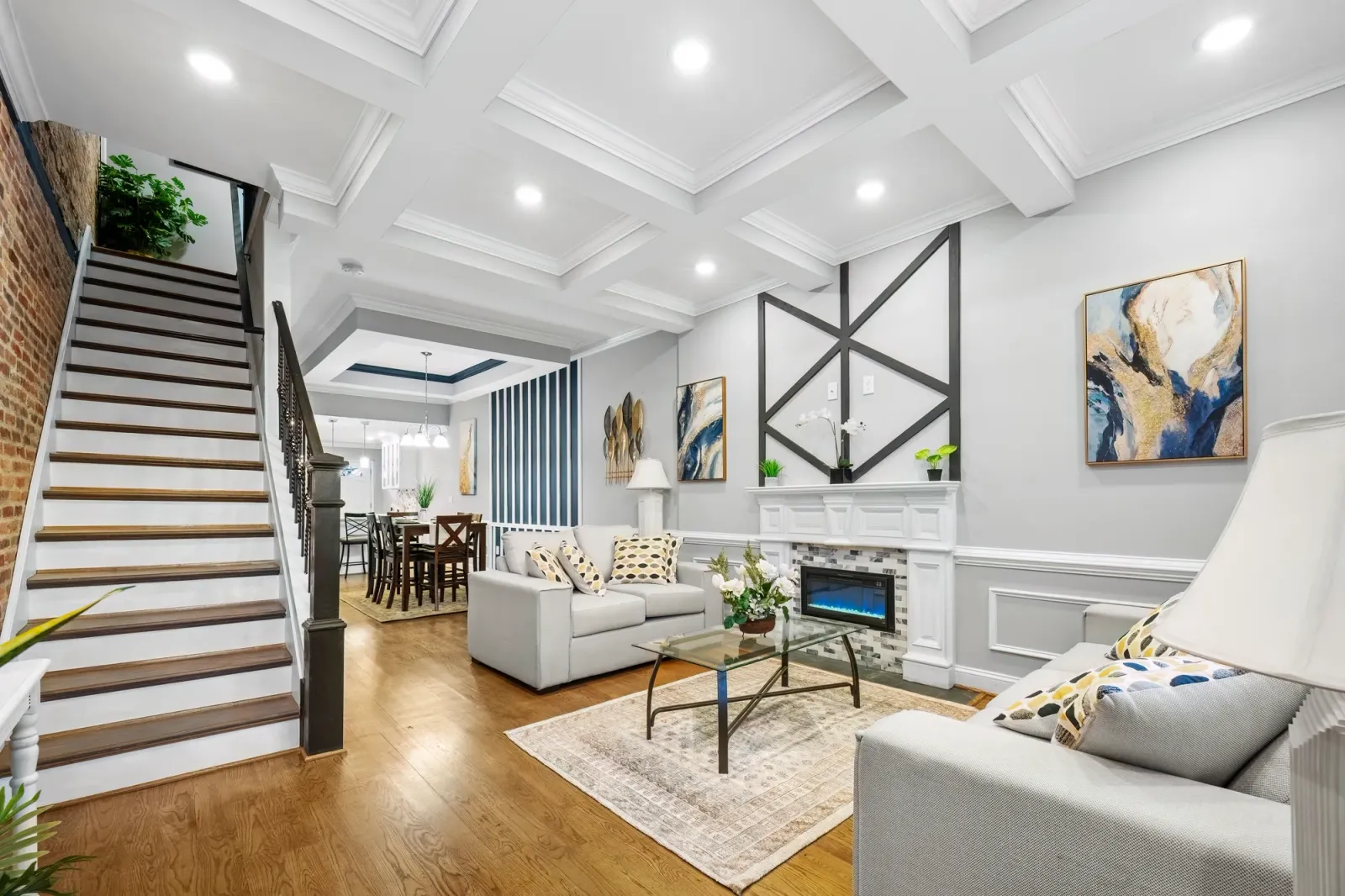
What Is a 360 Virtual Tour? A Plain Guide
A 360 virtual tour is an interactive walkthrough of a property you steer yourself. Built from stitched panoramas, hosted six months, from $300.
A 360 virtual tour is an interactive walkthrough of a property built from 360-degree photos, where the viewer steers themselves through each room and looks in any direction, as if standing inside. That’s the whole idea: instead of watching, you explore.
We’re OpenDoors360, and 360 virtual tours are a big part of what we shoot across New York City and Baltimore. They are built from panoramas stitched into a hosted walkthrough, start at $300 with six months of hosting, and earn their place where the layout decides the showing.
- What it is: a navigable, 360-degree view a buyer controls, not a video they watch
- How it works: stitched panoramic photos linked room to room, viewed in any browser
- Cost: our 360 virtual tour starts at $300 with six months of hosting
- Best for: out-of-town buyers, higher-end homes, and anything competitive
- Cousin tech: a “digital twin” or dollhouse view is the 3D-model version of the same idea
- Works on any phone, tablet, or computer, no headset required
What is a 360 virtual tour, exactly?
It’s an immersive experience of a property that a viewer navigates on their own. You click or drag to look around a room, then move to the next one, the way you’d walk through in person. Real estate listings use them so potential buyers can tour a home from anywhere, on any device.
The key word is interactive. A photo shows you what the photographer chose to frame. A 360 virtual tour hands the camera to the buyer, so they can look up at the ceiling, down at the floor, and into the corner you didn’t think to shoot.
A photo shows a room. A 360 virtual tour lets you stand in it.
How do 360 virtual tours actually work?
Under the hood, it’s panoramic photography plus software. A special camera captures each room in a full 360-degree sphere, top to bottom and all the way around. Those panoramas get stitched and linked together into a connected space, so clicking a doorway moves you smoothly into the next room.
The finished tour lives at a web link. Drop it on the listing, text it to a buyer, embed it on your site. It opens on mobile devices and desktops alike, no app or headset needed. Some tours add interactive elements like floor plan navigation, hotspot notes, or audio, but the core is simple: a real space you can explore online.
360 tour vs video vs photos
People mix these up, so here’s the difference side by side:
| Photos | Walkthrough video | 360 virtual tour | |
|---|---|---|---|
| What it is | Still images | A filmed path through the home | A space you navigate yourself |
| Who’s in control | You scroll | You watch the route | You explore every corner |
| Strength | Fast, scannable, every listing | Flow and emotion | Spatial depth, step-inside feel |
| Best for | All listings | Showing off a layout | Out-of-town and higher-end buyers |
None of these replaces the others. Photos are the foundation of any listing. A walkthrough video adds motion and feel. A 360 virtual tour adds the one thing the other two can’t: control. The buyer decides where to look and how long to linger.
It's the closest thing to a showing without leaving the couch.
What about Matterport and “digital twins”?
You’ll see the term digital twin thrown around. A digital twin is a 3D model of a property, often with the dollhouse view that lets you spin the whole house in space and drop into any room. Matterport is the best-known name for it. It’s the higher-end, more data-rich cousin of a 360 tour, with spatial accuracy close enough for measurements.
A panoramic 360 virtual tour gives you most of that immersive payoff at a lower cost, which is why it’s the better bet for most real estate listings. A full digital twin makes sense when a property’s potential really hinges on understanding the 3D layout, like a large or unusual home. For a standard listing, a 360 tour does the job. We put the two formats side by side, dollhouse view, floor plans, cost structure and all, in our 3D virtual tour vs 360 tour comparison.
How much does a 360 virtual tour cost?
Our 360 virtual tour starts at $300 and includes six months of hosting, scaled up for larger homes. That’s the panoramic tour buyers navigate room by room. Video and photos are priced separately, and booking them in one shoot is cheaper than separate visits. You can see the current rates on the 360 virtual tours page, and every tier, add-on and bundle is broken out in our guide to 360 virtual tour cost.
Across the market, a 360 tour runs less than a full Matterport digital twin, which is part of why agents reach for it first. The cost is small next to what it does for a listing that needs to reach buyers who can’t visit in person.
When a 360 virtual tour is worth it
Not every listing needs one. A starter apartment in a hot rental market will lease on photos alone. But a 360 tour earns its keep in a few clear cases.

Out-of-town and relocating buyers can walk the whole place before booking a flight. Higher-end listings use the tour to signal that the home is worth the extra look. And in a competitive market, the listing that lets a buyer explore on their own time is the one that holds attention while the others get a glance and a scroll.
For agents, a tour also cuts wasted showings. People who tour online and still book a visit are the serious ones, which saves everybody time.
The listing that lets a buyer wander is the one they remember.
There’s a quieter benefit too. A 360 virtual tour keeps a listing on a buyer’s screen longer, and time-on-page is a signal that platforms and agents both watch. A home a buyer lingers in feels like a home worth seeing. That stickiness is hard to buy any other way, and it comes baked into the format.
When you want one, send us the address and we’ll fold a 360 virtual tour into the shoot.
Common questions
What is a 360 virtual tour in real estate? It is an interactive, navigable view of a listing that buyers explore on their own. Built from 360-degree photos, it lets someone look around each room and move through the property online before they ever visit.
How do virtual tours save time and money? Virtual tours cut wasted showings. Buyers screen the home online first, so the ones who book an in-person visit are already interested, which saves the agent and the seller hours of foot traffic from people who were never a fit.
Is a 360 virtual tour the same as Matterport? Not quite. Matterport builds a 3D digital twin with a dollhouse view and measurement-grade spatial accuracy. A panoramic 360 virtual tour delivers most of the immersive feel for less, which makes it the practical choice for most listings.
Can buyers view a 360 tour on their phone? Yes. The tour opens in any browser on mobile devices and desktops, and they drag or tilt to look around. No app, no download, no headset.
How long does a 360 virtual tour take to make? The on-site capture adds time to a normal shoot, and we deliver the finished, hosted tour with the rest of the photos, usually within 24 to 48 hours.
Does a 360 tour help a listing stand out? A 360 tour does help, especially against listings that only have photos. Giving a buyer the ability to explore a space on their own terms holds their attention longer, which is half the battle in a crowded search. In a feed of near-identical listings, the one that invites you to walk through is the one that gets remembered and shared.
Booking in the city? We cover New York real estate photography and 360 virtual tours across all five boroughs.