HDR real estate photography
for New York and Maryland listings.
HDR real estate photography is the only photography we sell. Every frame on your listing starts as five exposures of the same view, from very dark to very bright, and the editor merges them into one photo, so the sky outside the window and the sofa in front of it both come out the way you saw them standing in the room. Pricing starts at $200 by interior square footage, and the photos come back in 24 to 48 hours.
HDR real estate photography is five exposures blended into one frame.
Five brackets, one photo.
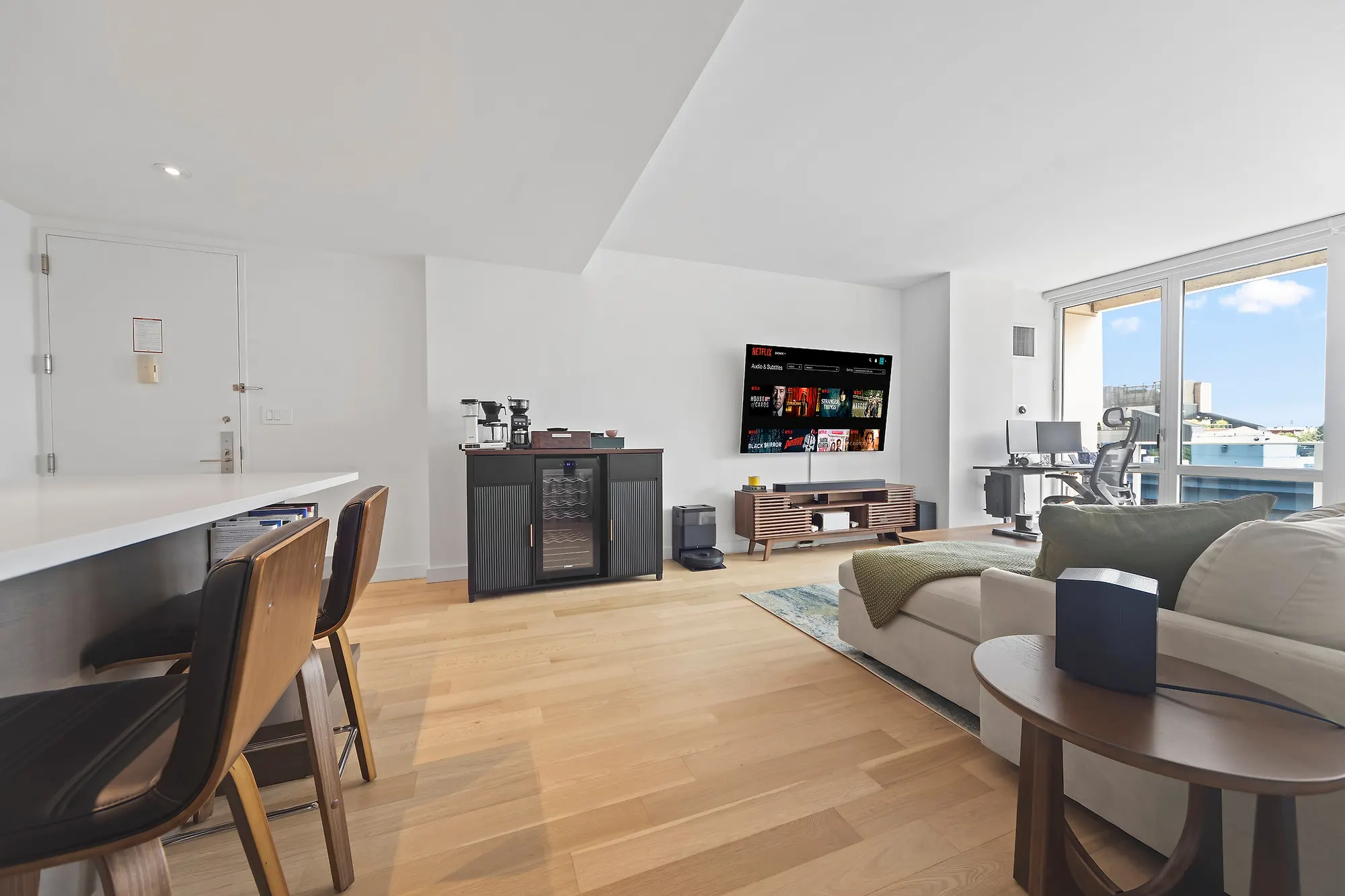
HDR stands for high dynamic range, and the range it means is the gap between the brightest and darkest parts of a room. On a clear afternoon the glass on a window wall can be many times brighter than the floor under the coffee table, and a camera taking one picture has to pick which end of that gap it gets right.
Set the exposure for the room and the window turns into a flat white panel with nothing in it. Set it for the window and the view comes back, but the room goes dim and the corners go muddy. Your eyes handle that gap without you noticing, and a single exposure can't.
So the photographer shoots the same frame five times, each one a step brighter than the last, which is what bracketing means. The darkest of the five holds the sky and whatever is across the street, and the brightest pulls detail out of the shadow behind the door. Blending is the editing step that takes the highlights from the dark frames and the shadows from the bright ones and builds one image from them, and that one image is the real estate photo that goes on the listing.
The view through the glass and the room around it, in one photo.
What HDR changes in a listing photo.
and mixed light.
Buyers look at the windows in a real estate photo before almost anything else, because a window tells them what the place looks out on and how much light it gets. A blown-out white rectangle tells them nothing about either.
In New York the view is part of what someone is paying for, whether it's a skyline, a tree on the block, or the brick front of the rowhouse across the street. A buyer would rather see that brick clearly than wonder what the white square is hiding, and HDR keeps the glass readable without darkening the room to get there.
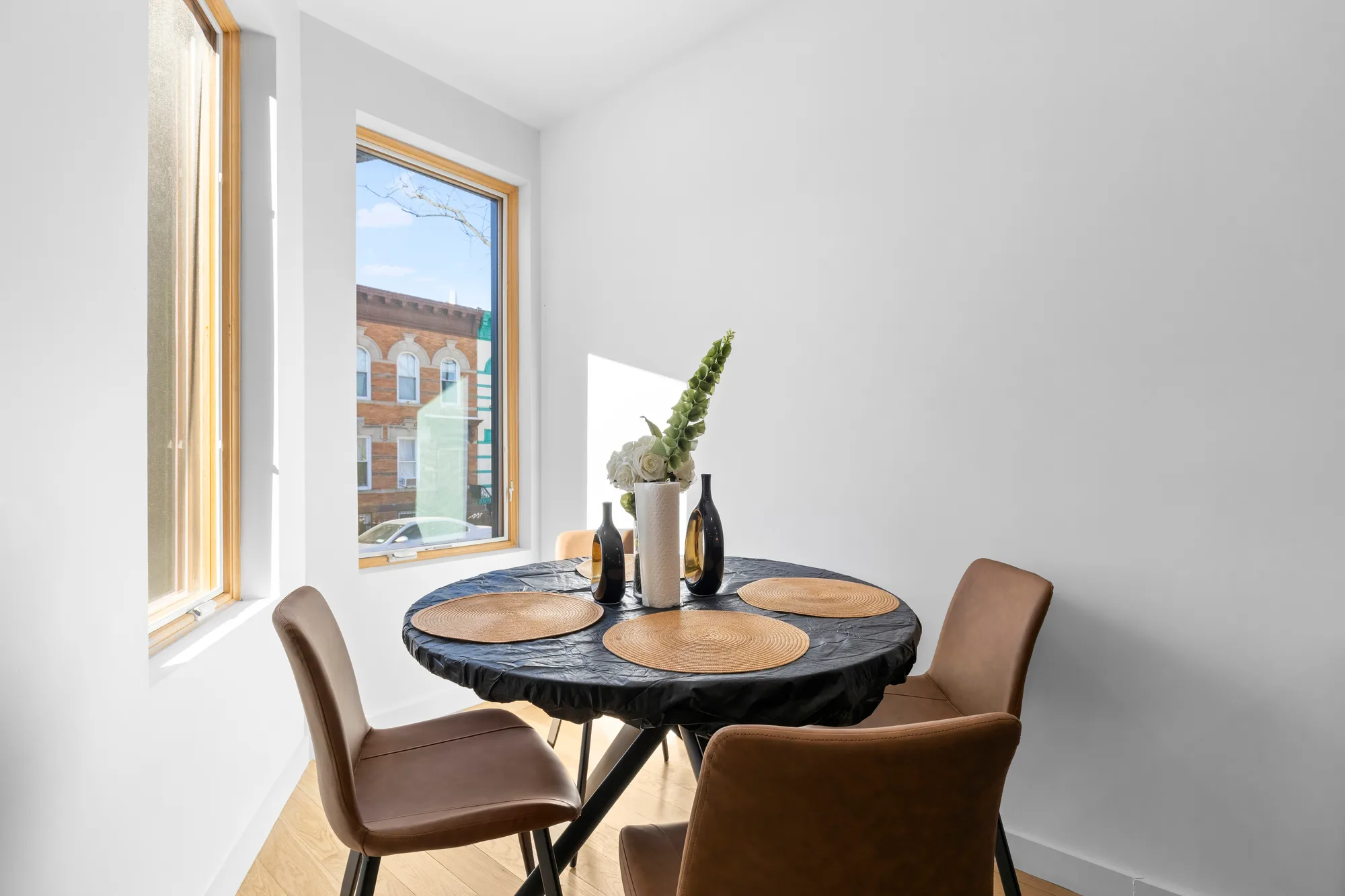
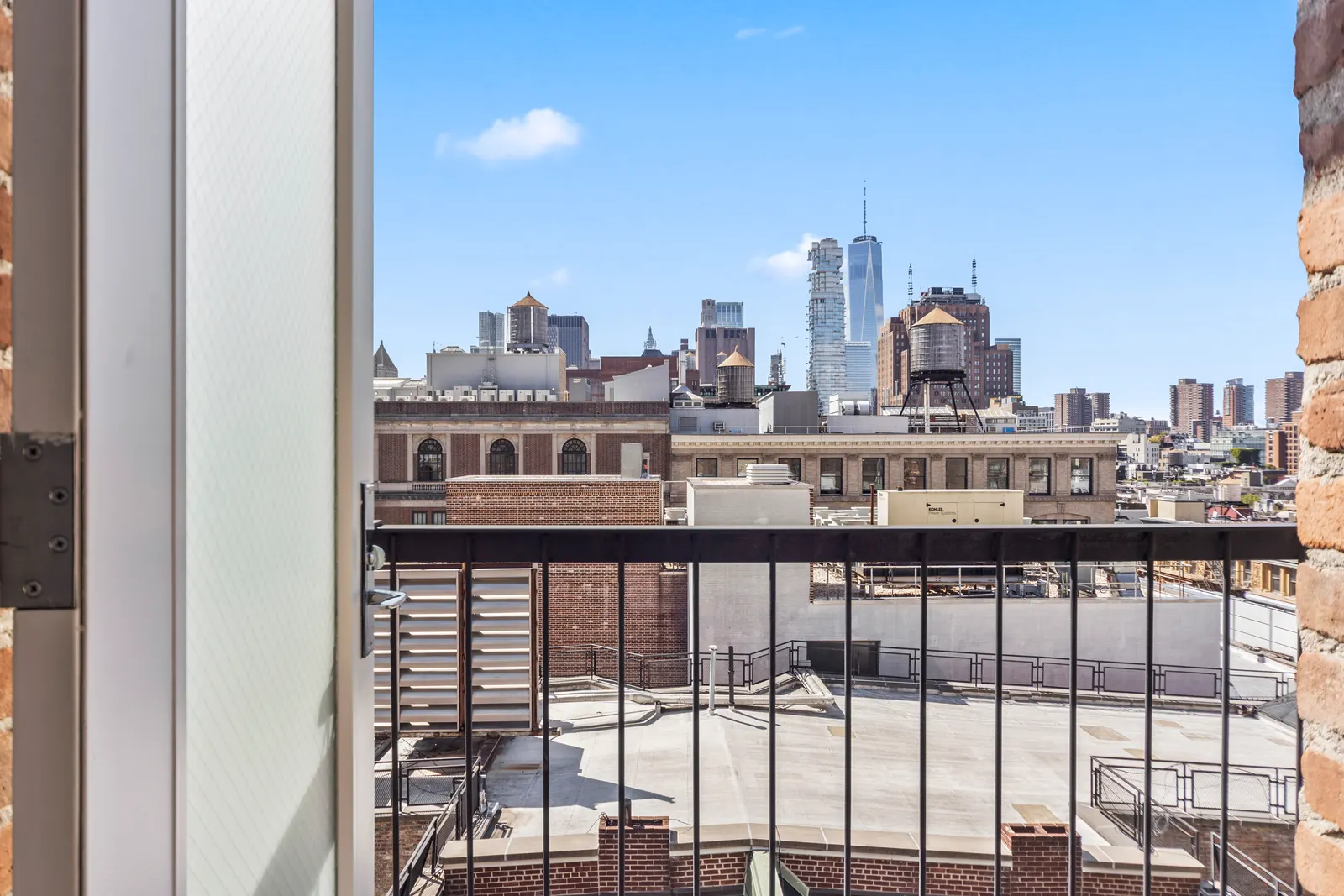
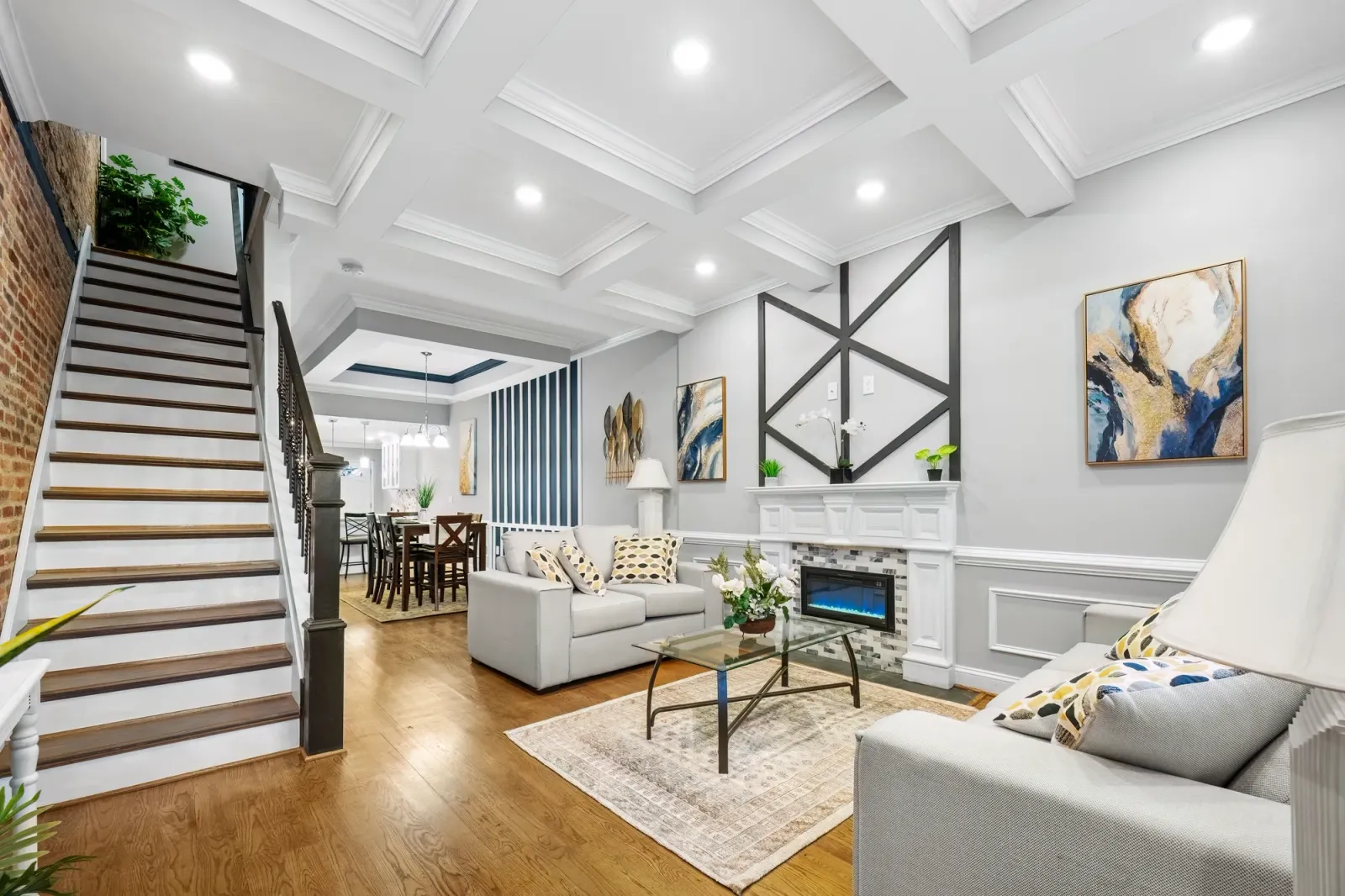
The far end of the room is the second thing it changes. A long living room lit only from the front windows, which describes plenty of Brooklyn brownstones and Baltimore rowhouses, comes out bright at one end and dark at the other in a single exposure. The bright brackets fill that back half in, so a buyer sees the floor, the stairs and the doorway into the next room, where one exposure would have left a shadow.
Then there's mixed light, which is any room lit by more than one thing at once. Daylight through the glass reads cool and the lamps read warm, and one exposure usually lets the bulbs bloom into bright blobs while the daylight side drifts blue. With five exposures there's a frame where a sconce is still a lamp with a shape, and the blend carries that version of it into the finished photo.
Where HDR goes wrong, and what it can't fix.
Does it look like the room?
The bad real estate photos people picture when they hear HDR are usually blends pushed too far. Gray halos around the window frames, walls with no shadow on them anywhere, a sky so blue it looks painted, and a beige sofa that came out orange. A buyer can't always name what's wrong, but they can tell the room looks off, and a room that looks off reads like a listing hiding something.
A good HDR real estate photo looks like the room did when you stood in it. A corner should still be a little darker than the middle of the floor, and a window should look bright, because it is. The point of the blend is to bring the range back inside what a buyer's eye expects, and flattening every surface to the same brightness overshoots it.
Ghosting is the other way it goes wrong. Anything that moves during the five exposures can come out doubled or see-through, like branches outside in the wind, a curtain by an open window, a ceiling fan, or a dog that wandered into the frame. Switching the fans off and keeping pets out of the room heads off most of it.
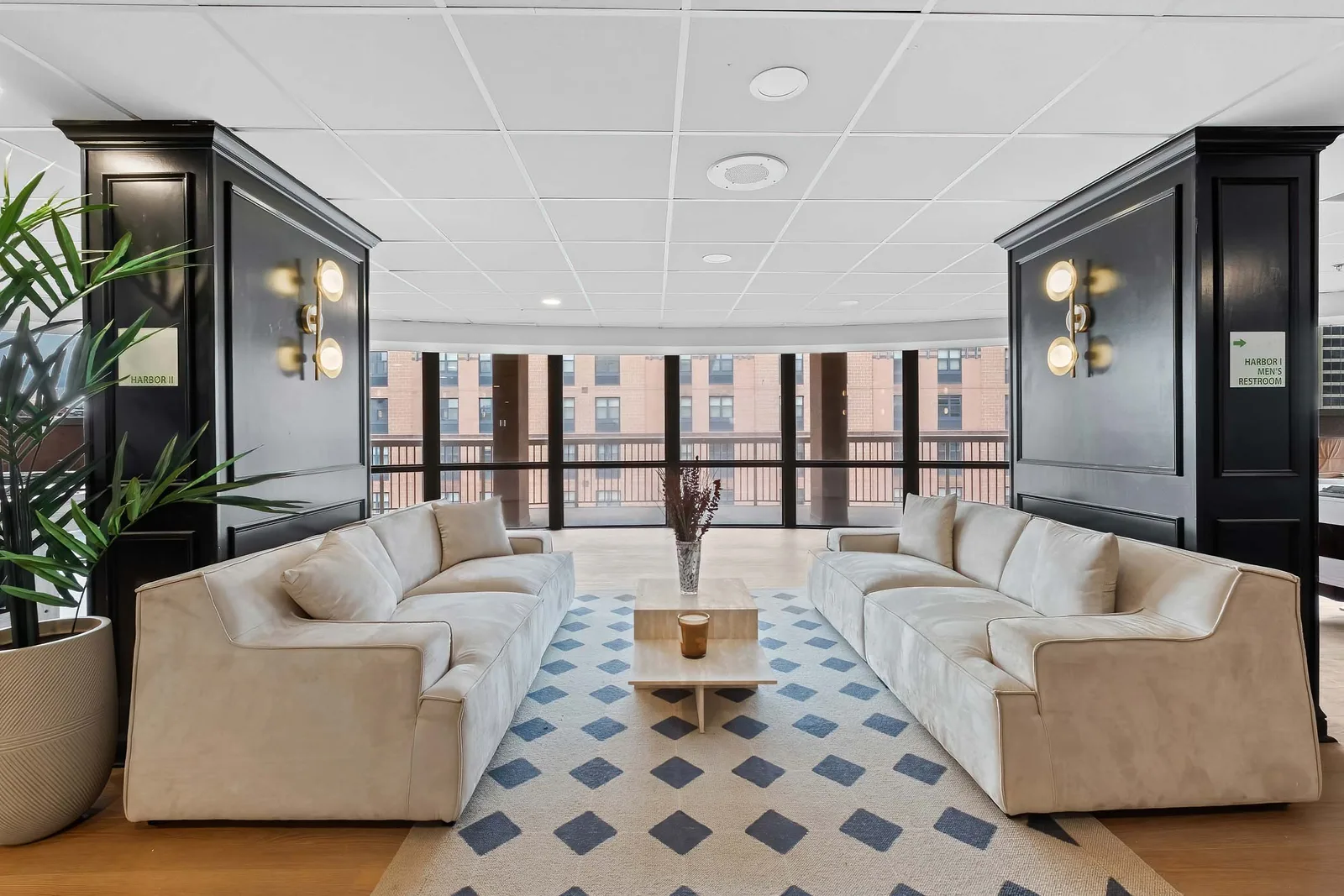
Some things HDR doesn't touch at all. A small bedroom stays the size it is, and if that bedroom faces an airshaft, the photo shows the airshaft, clearly. Counters that weren't cleared stay cluttered. HDR fixes exposure, meaning how bright and how dark each part of the photo is, and everything else in the frame is what was there on shoot day. Furnishing an empty room is a separate edit, virtual staging, at $50 per image.
HDR, flambient and a single exposure, side by side.
We shoot HDR.
Flambient shows up next to HDR in almost every search for either one, mostly in photographers' threads comparing the two. If you're the one hiring, the difference comes down to where the light in a real estate photo comes from.
| Technique | How it's shot | Windows and light | What to watch for |
|---|---|---|---|
| Single exposure | One picture at one brightness. | The window blows out to white or the room goes dark. Lamps tend to bloom. | You get the view or the room, and on a bright day almost never both. |
| HDR | Several exposures of the same frame, dark to bright, using the light already in the room. Ours is five. | Window detail holds while the room stays bright, and lamps and daylight are balanced in the blend. | Halos and flat walls when the blend is pushed too far. Ghosting where something moved. |
| Flambient | An exposure of the room's own light plus one or more frames lit by a flash, blended together. | Window detail holds, and the flash evens out color across the room. | A room that looks lit by a flash when the flash frames dominate the blend. |
Flambient is a real technique and good real estate photographers use it. Our sheet has one photography line, though, and it's HDR at five exposures a frame, because a blend built from natural light and the room's own lamps keeps the photo looking like the place a buyer walks into at the showing.
Priced by interior square footage, the same in both markets.
Quote within two business hours.
HDR photography is priced by interior square footage, from $200 for a place up to 1,500 square feet. It's $275 up to 2,500, and the tiers keep stepping up to $575 at 5,500, with anything bigger quoted by hand.
There's no cheaper standard tier underneath it. Standard photography came off our sheet because one exposure can't hold the highlights and the shadows at the same time, so HDR is what every listing gets, and nobody has to know to ask for it.
HDR also sits inside the bundles. Photos and a walkthrough video together start at $300, and adding a 360 tour to that starts at $575. Twilight is a flat $200 for five HDR frames shot at dusk, and our post on twilight real estate photography covers which houses it suits. Short-term rentals have their own rate card on the Airbnb photography page, and the whole sheet, add-ons included, is on real estate photography pricing.
| Square FootageSq ft | HDR PhotographyHDR | Video WalkthroughVideo | 360 Virtual Tour360 tour |
|---|---|---|---|
| 0 - 1,500 sq ft0-1,500 | $200 | $150 | $300 |
| 1,500 - 2,500 sq ft1,500-2,500 | $275 | $200 | $400 |
| 2,500 - 3,500 sq ft2,500-3,500 | $375 | $250 | $500 |
| 3,500 - 4,500 sq ft3,500-4,500 | $475 | $300 | $600 |
| 4,500 - 5,500 sq ft4,500-5,500 | $575 | $350 | $700 |
| 5,500+ sq ft5,500+ | Custom Quote. Call or text (701) 566-9171 | ||
| Add-ons · pair with any package, any size | |||
| Twilight | $200 5 images, flat | ||
| 2D Floor Plan | $125 per plan | ||
| Virtual Staging | $50 per image | ||
| Square FootageSq ft | HDR + Video | HDR + Video + 360 |
|---|---|---|
| 0 - 1,500 sq ft0-1,500 | $300 | $575 |
| 1,500 - 2,500 sq ft1,500-2,500 | $400 | $775 |
| 2,500 - 3,500 sq ft2,500-3,500 | $525 | $975 |
| 3,500 - 4,500 sq ft3,500-4,500 | $675 | $1,200 |
| 4,500 - 5,500 sq ft4,500-5,500 | $775 | $1,400 |
| 5,500+ sq ft5,500+ | Custom Quote. Call or text (701) 566-9171 | |
Not sure where the property lands on the sheet? Answer a few questions about it and the estimator reads the rates for you.
Five exposures on site, one finished photo on the delivery link.
24 to 48 hours.
Colin shoots New York, across the five boroughs, Long Island and Westchester. In Maryland the shoot goes to our Baltimore-based photographer, in Baltimore City and in Baltimore, Howard, Anne Arundel and Harford counties. We've shot over 250 properties since 2020, and in both markets every composition in the house is shot as five exposures before the camera moves on to the next one.
You never see the five. After the shoot the brackets go to editing, the editor merges each set into a single frame, and what lands on your delivery link is one finished real estate photo per angle, ready for the MLS, StreetEasy or Zillow. That takes 24 to 48 hours, and most deliveries land the next day.
The prep that helps HDR most is turning the lights on and the ceiling fans off before the photographer gets there. The blend balances the light that's in the room, so a lamp that's off stays a dark shape. The full prep list and the booking steps are under our real estate photography process, everything a shoot can include is on real estate photography services, and the neighborhoods each photographer covers are on New York real estate photography and real estate photography in Maryland.
What agents and sellers ask about HDR.
Text (701) 566-9171.
What is HDR in real estate photography?
HDR in real estate photography means shooting several exposures of the same frame, from dark to bright, and blending them into one photo so the windows and the room both hold their detail. HDR stands for high dynamic range. At OpenDoors360 every frame is five exposures, and what you receive is the single merged photo.
Is HDR good for real estate photography?
HDR is good for real estate photography because a room's windows and its shadows are too far apart in brightness for one exposure to hold both. It's how a real estate photo shows the view and the room in the same frame. The catch is that HDR pushed too far looks fake, with gray halos and flat walls, so a good blend leaves a corner a little darker than the middle of the floor and the window a little brighter than the wall.
How are HDR real estate photos shot?
HDR real estate photos are shot as a set of exposures of one composition, each a step brighter than the last, which are merged into a single image in editing. We shoot five exposures per frame, Colin in New York and our Baltimore-based photographer in Maryland, and the editor blends each set before delivery. The one piece of prep that helps most is turning every light on and the ceiling fans off before the photographer arrives.
Should the lights be on for HDR real estate photos?
The lights should be on for HDR real estate photos, every lamp, sconce and overhead fixture, with the ceiling fans off. The blend balances the light that's already in the room, so a lamp left off comes out as a dark shape, and a fan that's spinning can show up doubled across the five exposures.
Why do some HDR real estate photos look fake?
Some HDR real estate photos look fake because the blend was pushed too far: gray halos around the window frames, walls with no shadow anywhere, a sky that looks painted and colors that drift orange. Real estate photographers who blend with a lighter hand leave the corners slightly darker and the windows bright, which is how the room actually looks to a buyer standing in it.
Does HDR cost extra?
HDR doesn't cost extra at OpenDoors360, because it's the only photography we sell. It starts at $200 for up to 1,500 interior square feet and tops out at $575 at 5,500, with a custom quote past that. There's no standard tier underneath it to upgrade from.
What's the difference between HDR and flambient photography?
The difference between HDR and flambient photography is where the light comes from. HDR blends several exposures of the light already in the room, and flambient blends an ambient exposure with one or more frames lit by a flash. Both are ways of keeping window detail and an evenly lit room in one photo. Our sheet has one photography line and it's HDR.
Can HDR fix a dark or small room?
HDR can brighten the dark parts of a room, but it can't make a small room bigger or turn a room with no window into a sunny one. It brings back the shadow detail a single exposure loses, which is why a long rowhouse living room can read from the front window to the back wall. The size of the room and what's outside its window stay exactly what they were on shoot day.
How long does it take to get HDR photos back?
HDR photos from OpenDoors360 are delivered in 24 to 48 hours, and most land the next day. The five exposures behind each frame are merged during that window, so what arrives on the delivery link is one finished photo per angle.
Do you shoot HDR real estate photography in Maryland?
HDR real estate photography in Maryland is shot by our Baltimore-based photographer across Baltimore City, Baltimore County, Howard County, Anne Arundel County and Harford County. It's the same five exposures per frame and the same rates as New York, where Colin covers the five boroughs, Long Island and Westchester.
Send the address
and the square footage.
Add the services you want and the day the listing goes live, and a written quote comes back within two business hours. Every photo on it is HDR, five exposures a frame, back in 24 to 48 hours. You can also skip the form and contact a real estate photographer by text.
Google Trusted Photographer · 1,000,000+ views on Google Maps · 250+ properties since 2020
