
On this page
Two hundred dollars, flat. Five images. That’s the whole price sheet for this one, if the number was all you came for.
Twilight real estate photography is a set of exterior frames that show the property at dusk, the sky still holding color and the lights on the property glowing. At OpenDoors360 it’s virtual twilight: we take the HDR exteriors from the daytime shoot and edit them to dusk, so there’s no second trip at sunset. It’s a $200 add-on on any shoot, five HDR images, in New York or in Baltimore. The rate doesn’t move whether the house is 1,200 square feet or 5,000. Whether that $200 belongs on your listing comes down to the property, because the set is built around lights that are already on the outside of the house, and plenty of houses don’t have any.
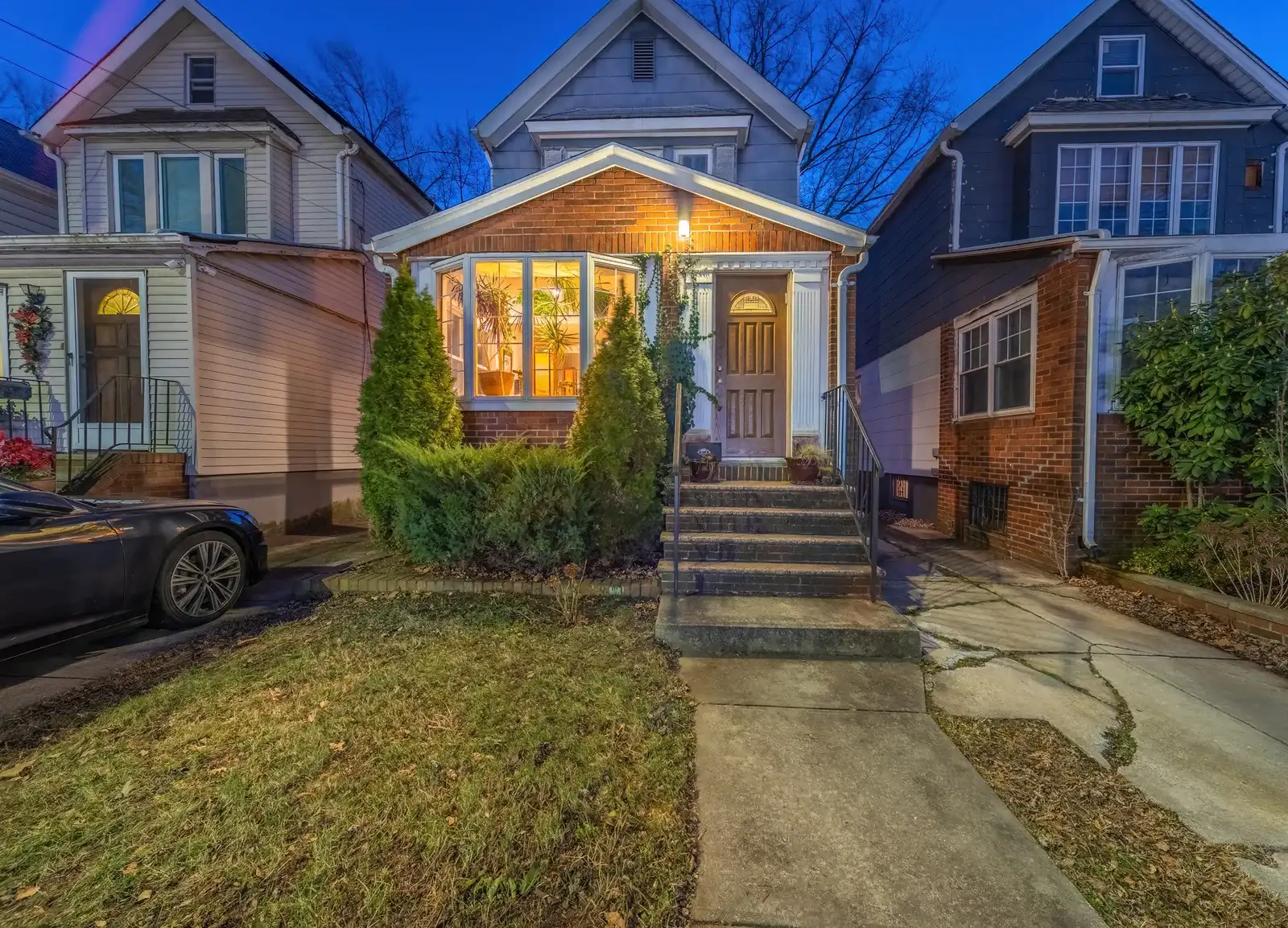
That is the look: a Queens single-family, the sky deep blue, the porch light and the bay window carrying the warm end of the frame. The other real estate photos in this post are daytime frames, each labeled as one, so nothing here reads as a twilight result that isn’t.
What twilight real estate photography is
A twilight set shows the exterior of the property the way it looks after the sun goes down and before the sky goes black. The sky holds a deep blue or orange gradient, the stretch photographers call the blue hour, the porch light and the warm interior behind the windows read against it, and the facade gets a glow a noon exposure can’t give it, because at noon the sun flattens everything.
It’s exterior work. The main daytime shoot covers interior and exterior, and that’s the part billed as HDR photography by interior square footage, so the twilight frames stay on the front of the property, the approach, and whatever the listing leads with outside. The stoop, the porch, the driveway, the water behind it.
Every frame starts as an HDR exterior from the shoot, with the same five-stage processing as the rest of our work, and the twilight edit is built on top of it: the sky goes to dusk, and the windows and fixtures go warm. Starting from a clean HDR exterior, with the dynamic range of the facade already held, is what lets the edit keep the detail in the brick and trim while the sky changes.
What the $200 buys
Five HDR twilight images, edited from the daytime exteriors, exterior-focused, delivered with the rest of the shoot in 24 to 48 hours. That’s the line as our published sheet states it, and the flat rate doesn’t move with square footage the way the real estate photography pricing tiers do, because a twilight set is close to the same amount of work on a rowhouse as it is on a colonial. Five is the count either way, and which five depends on what the property has to show. The $200 holds through every tier up to 5,500 square feet, and past 5,500 it becomes a custom quote like everything else on the order.
The sheet also says it works best on properties with exterior lighting, and that one line is most of the buying decision. A twilight image is a picture of light against a darkening sky, and the edit builds it from what the front of the house already has: sconces, a porch light, landscape lights, windows. A blank facade with no outdoor lighting and few windows gives it little to light, and the frame reads as a dim daytime photo. So before you add the line, stand at the curb and count the fixtures on the front of the house. If there are a few, you have a twilight listing.
A twilight frame is a picture of the lights. No fixtures, no frame.
Pricing a shoot with twilight on it?Pick the square footage and the estimator prices the shoot against the published sheet. Twilight is a flat $200 on top of the number it gives you.
When the twilight add-on is worth it
Real estate photographers use twilight on a short list of properties, and these four are where it earns its place.
The facade has exterior lighting. Sconces beside the door, a lit porch, landscape lights along a path, a lamp post at the end of the driveway. The frame is built around those lights and the warmth they throw on brick, stone, or siding.
The front is brick or brownstone. Brick holds warm light better than almost anything else a house can be made of. A Baltimore rowhouse front with a lit doorway, or a Brooklyn brownstone with the parlor windows glowing over the stoop, is the property type this add-on was built for.
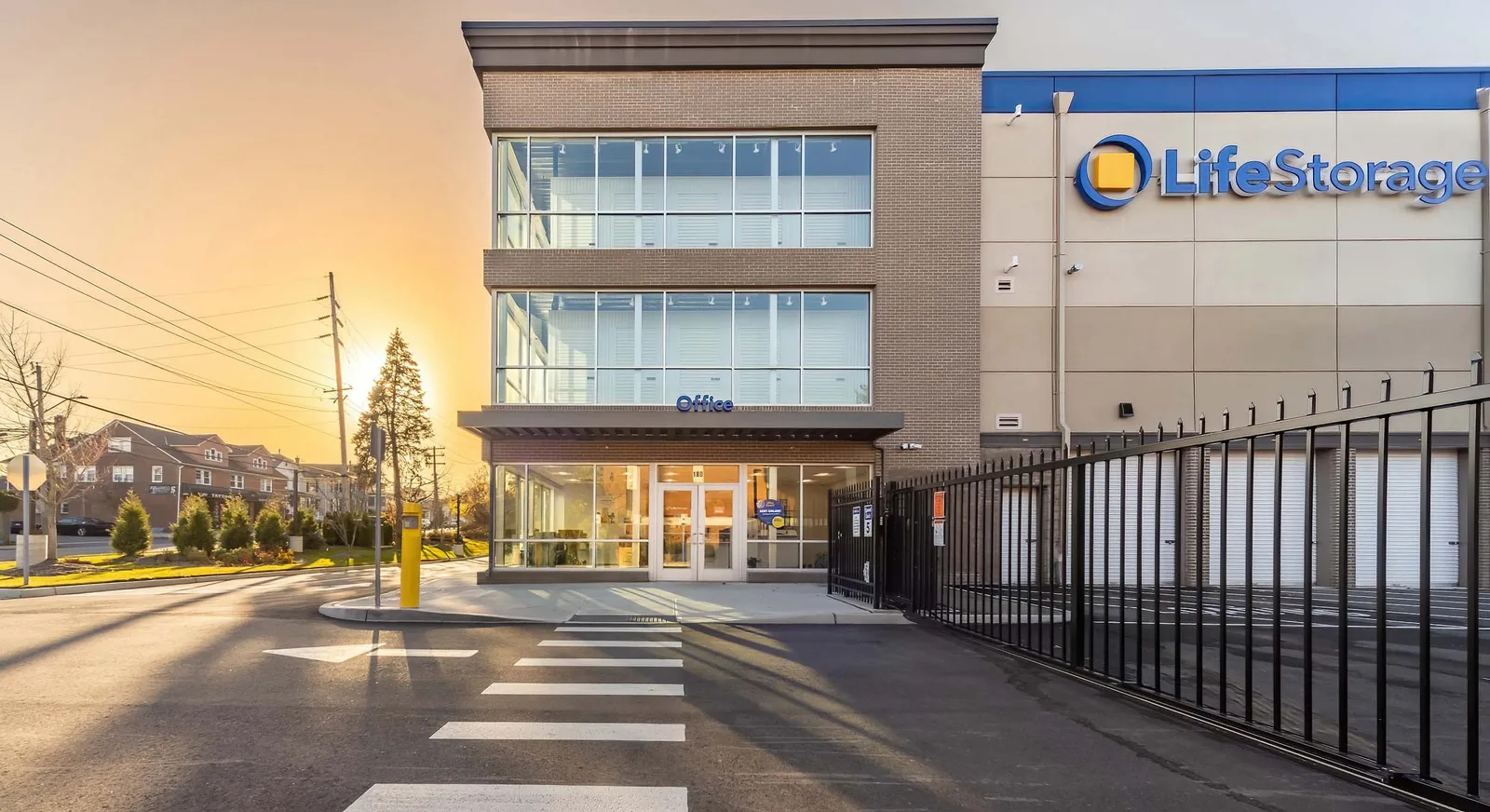
That one is the Glen Head job, shot late in the day with the sun still above the horizon, which is the hour before the twilight window opens. It is here as the contrast. Warm light on a facade is not the same thing as a twilight set, and the difference is the seller we’d tell to spend the $200.
Waterfront and larger lots. When the property sits on water or has a long approach, the dusk sky doubles in the reflection and the house reads as a destination instead of a building. Anne Arundel County has a lot of these.
The listing will lead with the exterior. If the first photo potential buyers see on the MLS or in a social media post is going to be the front of the house, the twilight shot is a candidate for that slot. It’s the only exterior in the set that shows the property with its lights on, which a noon frame can’t show at all.
When to skip it
Three cases where we’d rather you kept the $200.
There’s no exterior lighting. Covered above, but it’s the reason most twilight shots disappoint. A front with no fixtures and few windows gives the edit little to light.
The facade isn’t the story. A fourth-floor walk-up in a six-unit building, a condo in a tower, a unit whose front door opens off a hallway. The exterior belongs to the building, and the buyer is shopping the interior. Put the $200 toward the interior shoot or a 360 virtual tour instead.
A rental that leads with the interior. A tenant scrolling for a one bedroom is looking at the kitchen and the light in the living room. A dusk frame of the building’s front rarely moves that decision, and a rental listing has a shorter life than a sale, so the extra line has less time to pay for itself.
| The listing | Twilight add-on | Why |
|---|---|---|
| A brick rowhouse with a lit entry and sconces beside the door | Yes | Exterior lighting on a facade that holds warm light, which is what the sheet says the set works best on |
| A detached house on a large lot with landscape lighting and a long driveway | Yes | The approach and the lights are the listing’s lead photo |
| A well-kept house with no exterior fixtures and a dark porch | Probably not | With nothing to light, five dusk frames read as dim daytime photos |
| A rental unit inside a larger building, front door off a hallway | No | The exterior is the building’s, and the tenant is shopping the interior |
Daytime again, on South Hanover Street in Baltimore. Those two front windows with the shutters are what a twilight frame of this house would be built around, lit from inside with the lamps on. The main shoot covers the interior. The twilight set turns the front of the house to dusk, with those windows glowing warm from the sidewalk.
Virtual twilight, edited from the HDR shoot
Search the term and a lot of what comes back is virtual twilight, so it’s worth knowing what it is. Virtual twilight photography is a category of photo editing rather than a time of day. A daytime exterior frame goes to the editing desk after the shoot, the sky is replaced with dusk, and the windows and fixtures are lit warm, as if the interior lights were on.
That’s how ours is made. Every exterior we shoot is already HDR and already goes through five-stage processing, so the twilight edit starts from a clean, evenly exposed frame and comes back with the rest of the shoot. Nobody has to come back to the property at sunset, and the listing doesn’t wait on a clear evening.
The published line still ties the add-on to properties with exterior lighting, because the edit looks most like the real thing when it’s lighting fixtures the house actually has. When the front of the property has nothing to light, the $200 does more somewhere else on the shoot.
New York facades and Baltimore facades
The add-on is the same $200 in both markets, and the properties it suits look different in each.
In New York, Colin’s side, the classic twilight listing is a brownstone. A stoop, a lit parlor floor, an entry under the stairs with its own light, and a row of neighbors that frames the one for sale. Detached houses in Queens, on Long Island and in Westchester bring the driveway and the porch into it, and a house with a lawn gives the sky room. Commercial work out there gets the same treatment, which is how the Glen Head frames in this post came to exist.
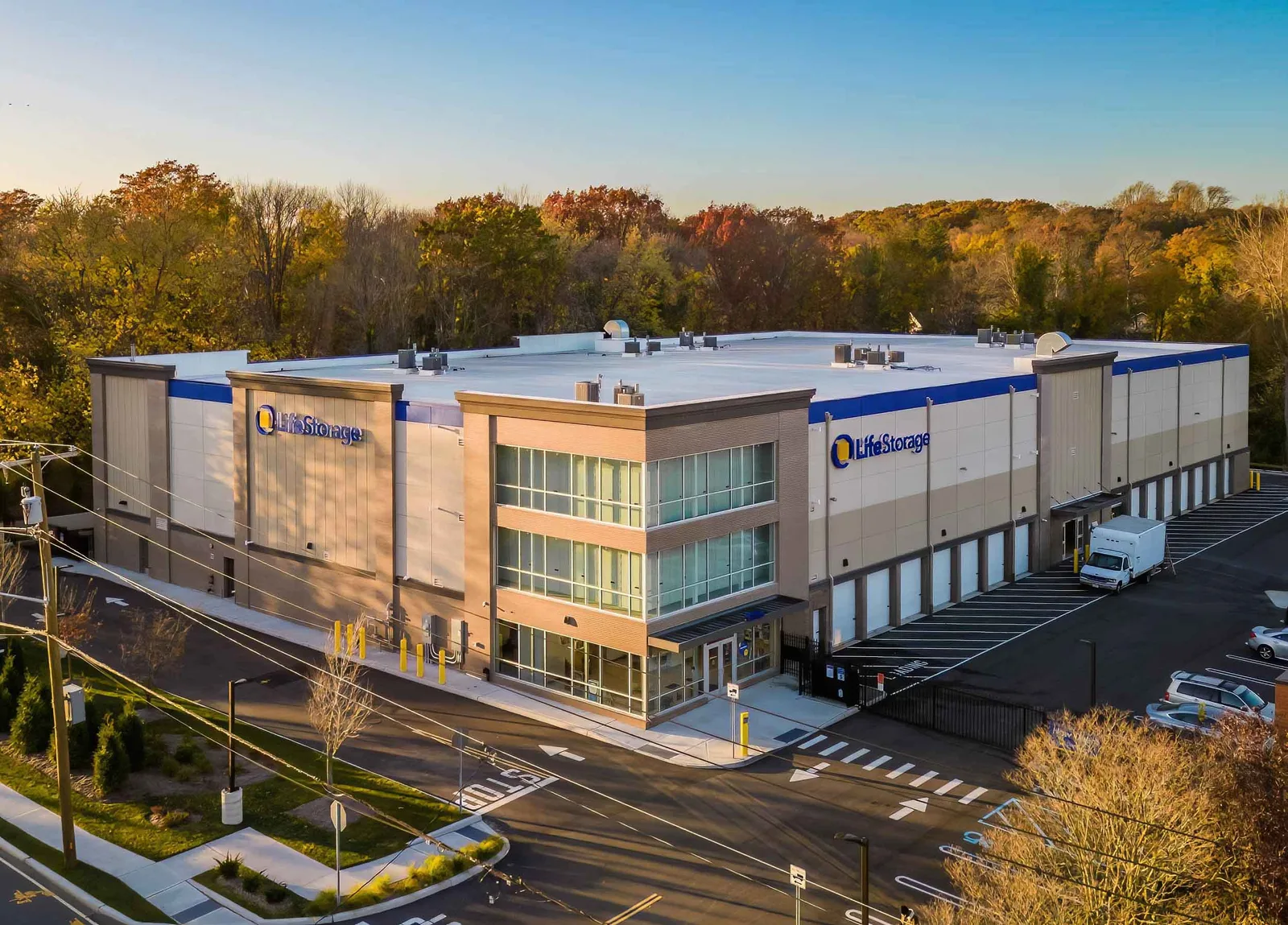
Same property, from the air, in the late light before dusk. That one is from the drone, which Colin flies in New York, and it shows what a commercial real estate photography job looks like when the exterior set is built across the end of a day. Both Glen Head pictures sit in the hour before the twilight window, the aerial and the ground-level frame at the top, and neither one is a twilight set.
In Baltimore, where our Baltimore-based photographer works, it’s the rowhouse front. Brick, formstone in some neighborhoods, white marble steps, a transom over the door. The marble picks up whatever light is around it, and a lit doorway reads against a block of dark fronts. Out in the county and into Howard and Anne Arundel the lots get bigger, the houses get set back, and along the water in Anne Arundel the sky shows up twice, once overhead and once on the surface behind the house.
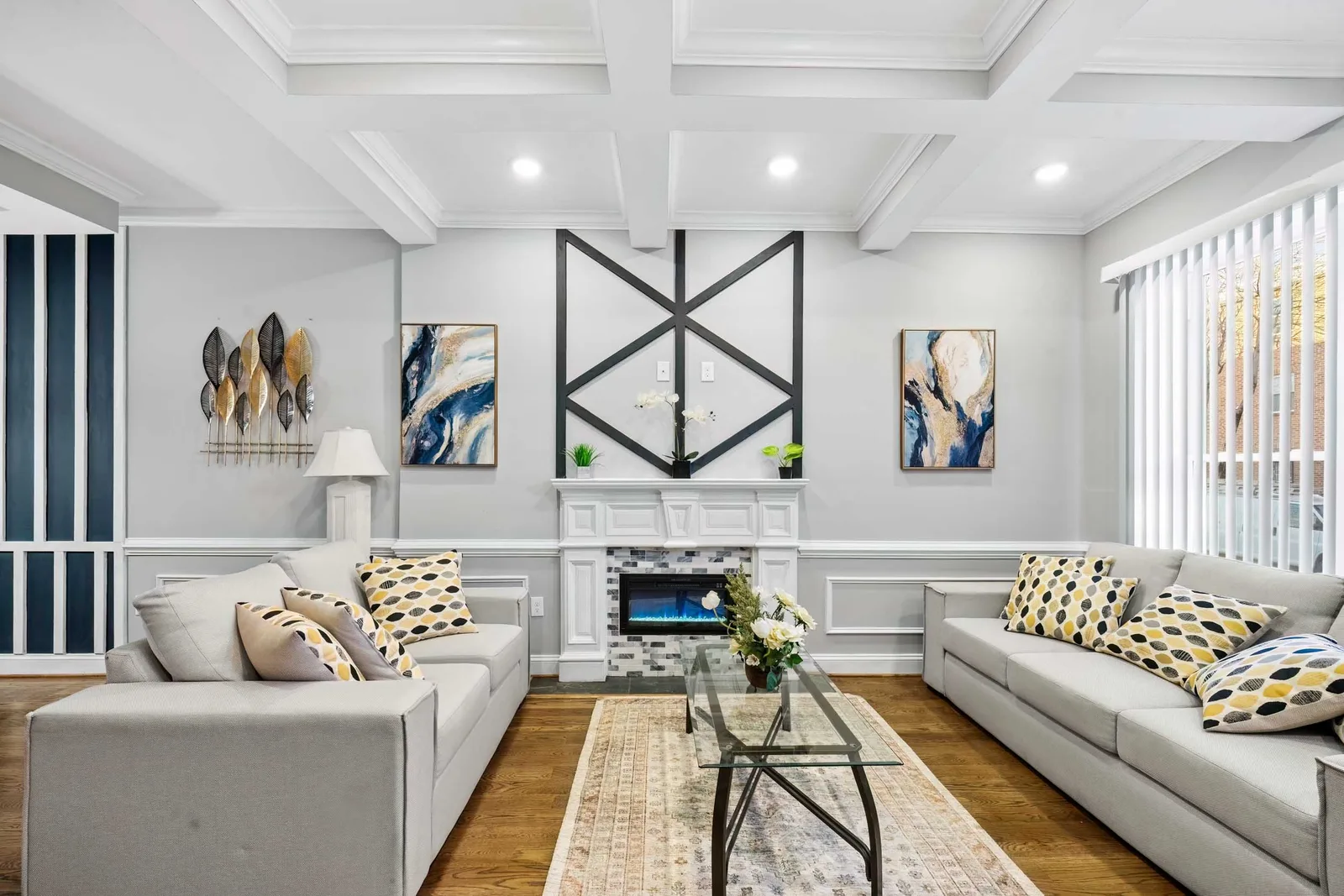
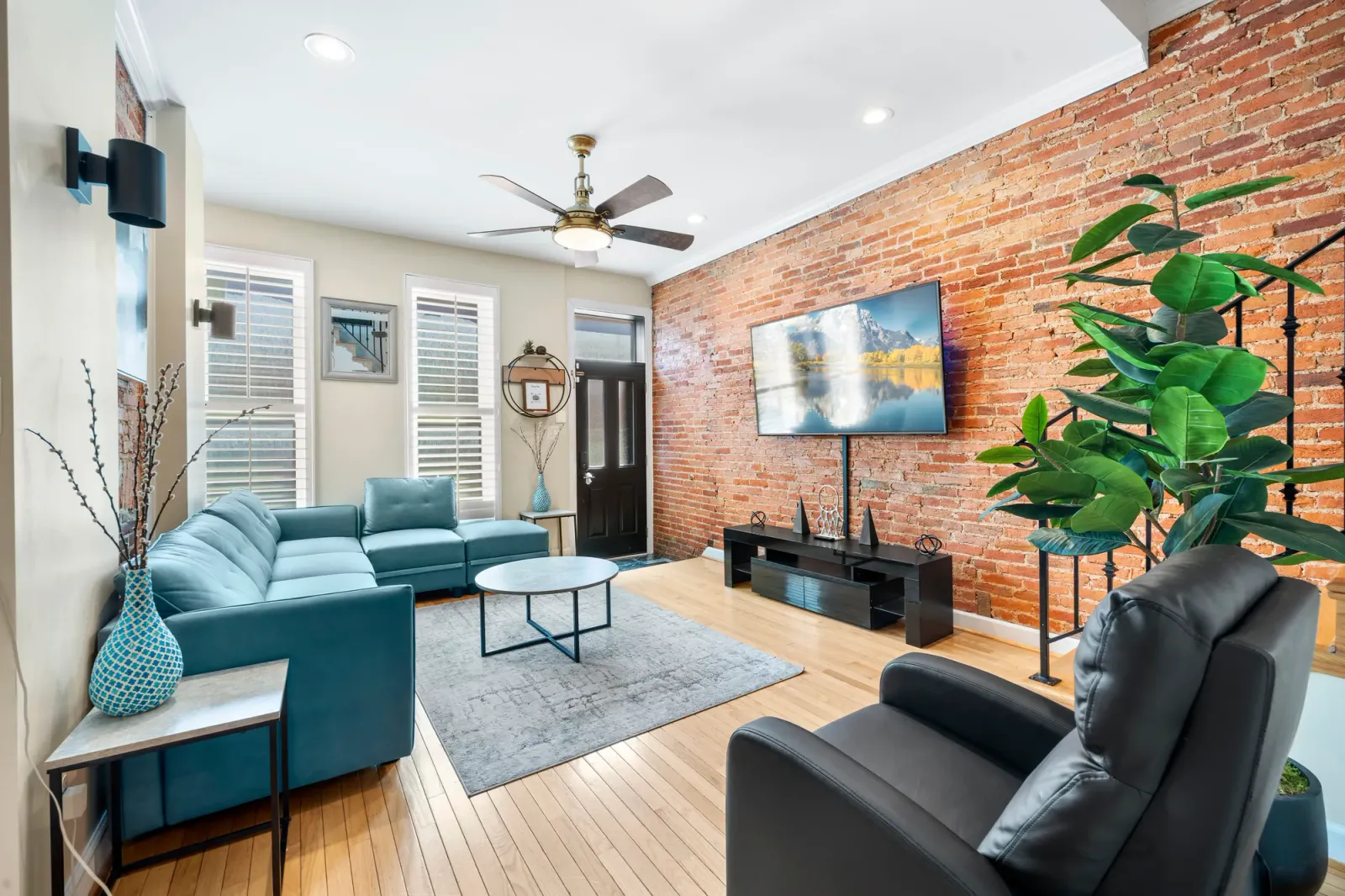
Aisquith Street, in daylight. A front room like this one, with the lamps on and the blinds open, is the glow behind the windows in a twilight frame. From the sidewalk at dusk you’d see none of the coffered ceiling and none of the striped wall. You’d see warm rectangles behind the blinds and the front of the house.
The New York real estate photography and real estate photography in Maryland pages each name the areas we work in, so check the one your listing sits in.
How to add twilight to a booking
Add it to the order. Twilight is an add-on on any shoot in either market, so it rides on top of an HDR shoot, a bundle, or a 360 tour booking, whichever one the listing is getting, and it’s $200 on all three. The Instant Estimate prices the shoot itself, and the flat $200 goes on top of the number it returns, so you can total it before you send us the address.
Tell us it’s on the order when you book, and the five twilight images come back with the rest of the shoot. There’s no separate visit to schedule, because the twilight is in the edit.
The shoot underneath it prices the usual way. HDR photography runs $200 to $575 depending on the interior square footage. A 360 tour starts at $300 and a walkthrough video at $150. Photos and video together start at $300, and adding the 360 to that starts at $575. Our breakdown of what real estate photography costs walks the tiers, and the real estate photography services page lists what ships with a shoot. Send the address and the square footage and we reply with a number within two business hours.
Common questions
How much does twilight real estate photography cost? Twilight real estate photography from OpenDoors360 is $200 flat for five HDR exteriors edited to dusk. It is an add-on to any shoot in New York or Baltimore, and the rate holds through every tier up to 5,500 square feet. Properties above 5,500 square feet are a custom quote.
Is there a separate twilight shoot at dusk? OpenDoors360 does not schedule a separate twilight shoot at dusk. Our twilight images are virtual twilight, edited from the HDR exteriors taken at the daytime shoot, so nothing has to be scheduled at dusk. Mention the twilight line when you book and the five images come back with the rest of the shoot.
What is the difference between virtual twilight and real twilight? Both show the property at dusk. Real twilight is shot on the property after sunset. Virtual twilight is a daytime exterior photo edited to look like dusk, with the sky replaced and the windows and fixtures lit warm. OpenDoors360’s twilight add-on is virtual twilight, edited from the HDR exteriors of the daytime shoot.
Do you need exterior lights on for twilight photos? Exterior lights help twilight photos, and twilight photography works best on properties with exterior lighting, because the edit builds the frame around the fixtures and windows the house actually has, glowing against a darkening sky. A front with a porch light, sconces or landscape lights gives the edit the most to work with.
How many photos come in a twilight set? Five HDR images, exterior-focused. Which five depends on what the property has to show, and every frame gets the same five-stage HDR processing as the rest of the shoot so the windows and the sky both keep their detail.
Can twilight be added to a 360 tour booking? Yes. Twilight is an add-on on any shoot in either market, so it goes on top of a 360 virtual tour booking, an HDR shoot, or a bundle at the same $200. The Instant Estimate prices the shoot itself, and the flat $200 goes on top of the number it returns.
Is twilight available in Baltimore? Yes. Twilight is available on shoots across Baltimore City, Baltimore County, Howard County and Anne Arundel County, and across the five boroughs, Long Island and Westchester. The add-on is $200 for five HDR images in both markets.
Does twilight photography cost more for a bigger house? No. The twilight add-on is $200 flat through every tier up to 5,500 square feet, unlike HDR photography, which runs $200 to $575 by interior square footage. Anything above 5,500 square feet is a custom quote.